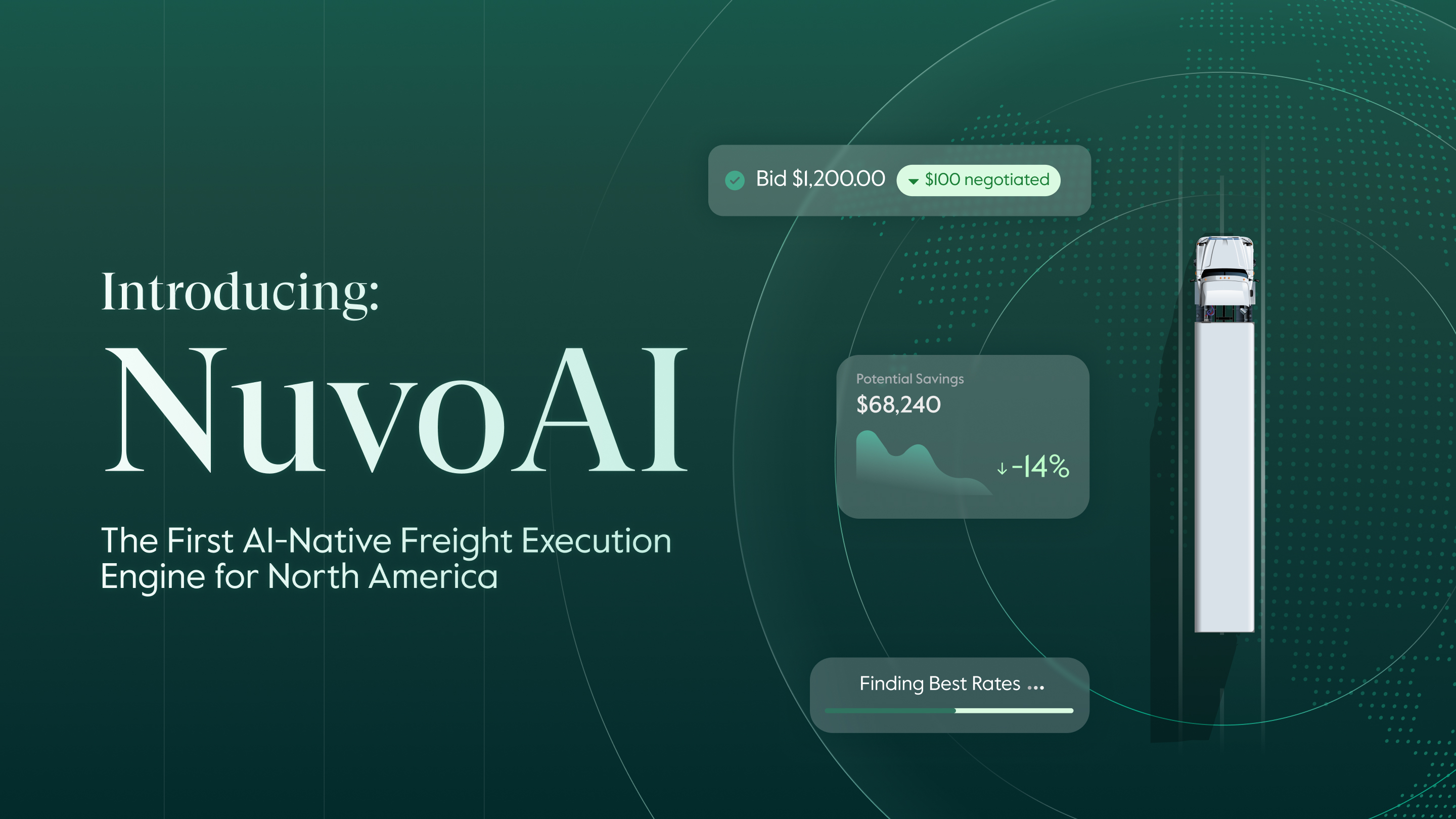
Presentamos Nuvo AI: el primer motor de ejecución de carga nativo de IA para América del Norte
March 17, 2026
Share:
Con toda la tecnología disponible en la actualidad, la ejecución de carga debería ser cada vez más fácil. Pero no lo es.
Sobre el papel, la industria nunca ha tenido más herramientas, datos o automatización a su disposición. Sin embargo, para la mayoría de los equipos en América del Norte, mover carga todavía se siente obstinadamente práctico. La ejecución depende de una coordinación constante: correos electrónicos, negociaciones, portales, traspasos, y seguimientos, solo para mantener las cargas en movimiento. Y esa obra no termina una vez que se envía una licitación. Se extiende a lo largo del ciclo de vida completo de una carga, desde precios y cobertura hasta despacho, seguimiento y entrega, consumiendo tiempo y energía en cada paso.
Irónicamente, la ola de nuevas herramientas de IA no ha simplificado esta realidad, sino que la ha agravado. Ahora se espera que los equipos administren una capa en expansión de productos de IA desconectados que se encuentran en la parte superior de este proceso ya fragmentado.
Y sin embargo, el flete aún se entrega. No porque el sistema lo haga fácil, sino porque los equipos lo hacen funcionar. A través de la experiencia, la persistencia y mucho esfuerzo práctico, las personas intervienen donde las herramientas se quedan cortas.
El resultado es la ejecución por fuerza bruta en lugar de apalancamiento, dejando a los equipos drenados por la extinción de incendios del día a día y con muy poco espacio para enfocarse en el trabajo estratégico que realmente hace avanzar el negocio.
El motor de ejecución de carga del futuro
En Nuvo, creemos que el flete no debe requerir supervisión constante. Debe ejecutarse de manera confiable en segundo plano, sin llevar a los equipos a la ejecución solo para mantener las cosas en movimiento.
Hoy, presentamos NuvoAI: un nuevo modelo operativo en el que Nuvocargo ejecuta carga continuamente como un sistema de ejecución impulsado por IA en toda América del Norte.
En lugar de ayudar con tareas individuales, los agentes de IA de Nuvo asumen la responsabilidad de los resultados de ejecución durante todo el ciclo de vida de una carga. Los pedidos se consumen directamente de los sistemas del cliente, los envíos se planifican y cotizan, la capacidad se obtiene y valida, las citas están aseguradas, la ejecución se supervisa en tiempo real y cada carga se cierra con un registro de ejecución completo y auditable.
Detrás de escena, los agentes especializados de IA trabajan juntos en enrutamiento y planificación, precios, abastecimiento de capacidad, programación, seguimiento y cierre financiero. Cada agente opera dentro de una capa de ejecución compartida, por lo que las decisiones tomadas en el proceso ascendente se llevan a cabo hasta la ejecución y se cierran, sin traspasos, bandejas de entrada ni reconciliación manual.
El resultado es una forma diferente de correr el flete. Uno diseñado para ofrecer los resultados que más importan a los transportistas:
Menor gasto de flete, mediante decisiones disciplinadas basadas en datos y precios y capacidad aplicadas de manera consistente a escala
Servicio más consistente, mediante validación proactiva, monitoreo e intervención antes de que los problemas aumenten
Mayor control, a través de un único sistema de registro para cada decisión, evento y documento
Acomponiendo la inteligencia operacional, ya que cada envío ejecutado fortalece el sistema a lo largo del tiempo
Este es el Motor de Ejecución de Carga del Futuro: un sistema construido no para ayudar a los equipos, sino para quitar la ejecución de su plato, por lo que el flete corre de manera predecible, y los equipos pueden enfocarse en el trabajo que realmente mueve el negocio hacia adelante.
Admisión y planificación de pedidos
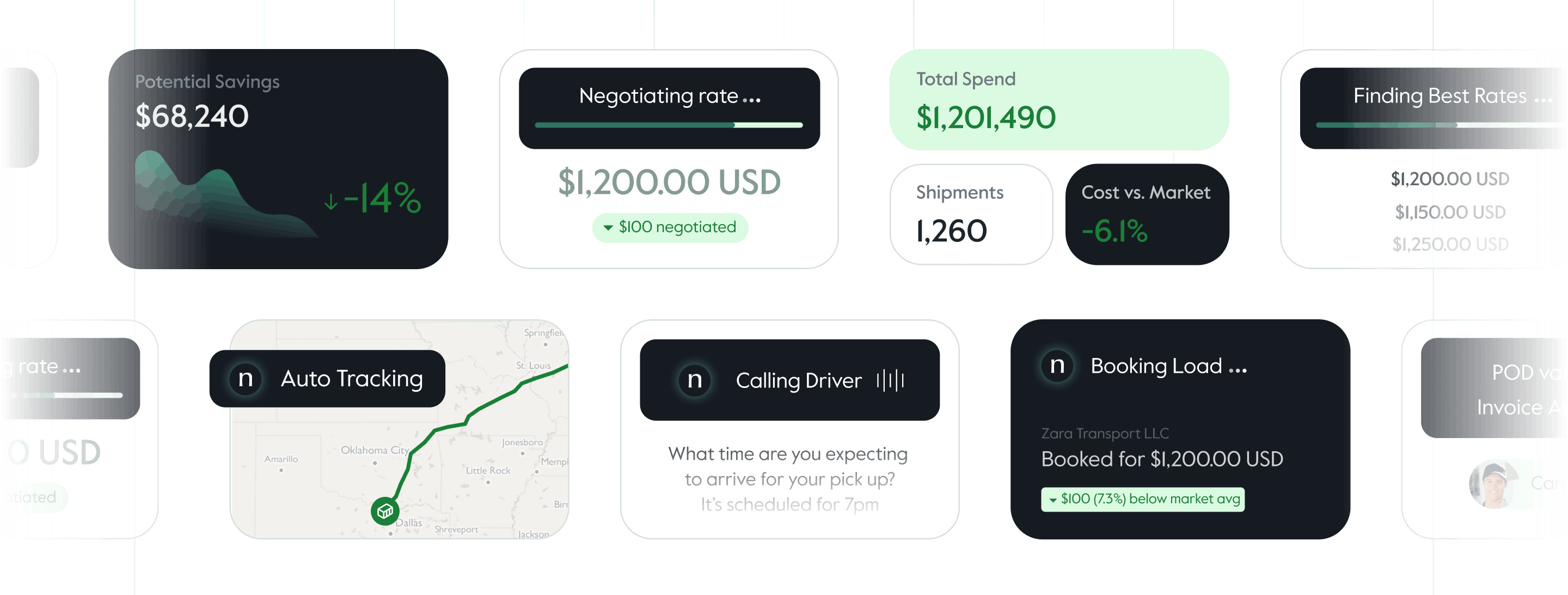
Los agentes de IA se conectan directamente al ERP del remitente para extraer pedidos confirmados y priorizados. Esos pedidos se analizan juntos, por fechas de vencimiento, costo, modo y equipo, y se traducen en un plan de transporte. Ese plan se convierte en un conjunto de envíos que el sistema es responsable de ejecutar, no solo cotizar o licitar.
Precios y abastecimiento de capacidad
Para cada envío, los agentes de IA generan precios utilizando reservas históricas, comportamiento de puja del transportista y puntos de referencia del mercado en vivo. La capacidad se obtiene en paralelo a través de guías de enrutamiento y mercados externos, y los agentes negocian simultáneamente con múltiples operadores en lugar de secuencialmente. Todas las ofertas, tasas y decisiones se registran, se tamizan y se clasifica, con participación humana solo cuando se requiere un juicio.
Creación de envíos y programación de citas
Una vez que un envío está listo, los agentes de IA lo crean automáticamente a partir de las ofertas recibidas por correo electrónico, EDI o API. Los documentos requeridos son solicitados, clasificados, y adjuntos sin manejo manual. Los agentes de programación se ponen en contacto directamente con las instalaciones para asegurar las citas de recogida y entrega antes de que se proceda a la ejecución, lo que garantiza que las restricciones se validen por adelantado.
Ejecución en tránsito
A medida que se mueve la carga, los agentes de IA establecen el seguimiento a través de ELD, GPS o datos telefónicos del conductor y monitorean la ejecución de manera continua. Los hitos clave (recogida, tránsito y entrega) se confirman automáticamente. Cuando falta información o cambian las condiciones, el sistema escala con contexto completo, preservando un rastro de ejecución completo.
Entrega, facturación y cierre
Después de la entrega, los agentes de IA recopilan comprobantes de entrega y facturas de transportista, los comparan con las confirmaciones de tarifas y envían excepciones para su revisión. Las facturas aprobadas fluyen a través del pago y la facturación del remitente sin conciliación manual, cerrando el bucle en la ejecución.
Una torre de control, inteligencia compuesta
Cada acción a lo largo de estas etapas: decisiones de precios, interacciones con el transportista, documentos, eventos y excepciones, se registra en tiempo real. Esto crea una única torre de control y un registro de ejecución auditable en todos los pedidos, carriles, transportistas, instalaciones y niveles de servicio. Con el tiempo, ese conjunto de datos potencia el reporting personalizado y la optimización continua, convirtiendo la ejecución diaria en inteligencia operacional en lugar de ruido.
Experimente la ejecución de carga end-to-end con IA
Comience con un pequeño piloto (tan poco como 10 cargas) junto con sus herramientas y transportadores actuales.
Los agentes de IA se conectan directamente al ERP del remitente para extraer pedidos confirmados y priorizados. Esos pedidos se analizan juntos, por fechas de vencimiento, costo, modo y equipo, y se traducen en un plan de transporte. Ese plan se convierte en un conjunto de envíos que el sistema es responsable de ejecutar, no solo cotizar o licitar.
Precios y Abastecimiento de Capacidad
Para cada envío, los agentes de IA generan precios utilizando reservas históricas, comportamiento de puja del transportista y puntos de referencia del mercado en vivo. La capacidad se obtiene en paralelo a través de guías de enrutamiento y mercados externos de nuestro Red de operadores de más de 300 K, con agentes negociando simultáneamente con múltiples operadores a través de voz y correo electrónico en lugar de secuencialmente. Todas las ofertas, tarifas y decisiones se registran, examinan y clasifican, con expertos en flete humano involucrados cuando se requiere un juicio.
Creación de envíos y programación de citas
Una vez que un envío está listo, los agentes de IA lo crean automáticamente a partir de las ofertas recibidas por correo electrónico, EDI o API. Los documentos requeridos son solicitados, clasificados, y adjuntos sin manejo manual. Los agentes de programación se ponen en contacto directamente con las instalaciones para asegurar las citas de recogida y entrega antes de que se proceda a la ejecución, lo que garantiza que las restricciones se validen por adelantado.
Ejecución en tránsito
A medida que se mueve la carga, los agentes de IA establecen el seguimiento a través de ELD, GPS o datos telefónicos del conductor y monitorean la ejecución continuamente, lo que incluye recordar a los transportistas que activen el rastreo por GPS. Los hitos clave (recogida, tránsito y entrega) se confirman automáticamente. Cuando falta información o cambian las condiciones, el sistema se intensifica con contexto completo, preservando un rastro de ejecución completo.
Entrega, Facturación y Cierre
Después de la entrega, los agentes de IA recopilan comprobantes de entrega y facturas de transportista, los comparan con las confirmaciones de tarifas y enrutan excepciones para su revisión. Las facturas aprobadas fluyen a través de pago y facturación del remitente sin conciliación manual, manejando auditoría de fletes y pago y cerrando el bucle en ejecución.
Torre de control: un sistema, inteligencia compuesta
Cada acción en estas etapas (decisiones de precios, interacciones con el operador, documentos, eventos y excepciones) se registra en tiempo real dentro del Nueva torre de control de IA. Esto crea un único registro de ejecución auditable en órdenes, carriles, operadores, instalaciones y niveles de servicio, con reporting y análisis integrados. No se requiere ninguna herramienta adicional de BI.
Con el tiempo, ese conjunto de datos potencia el reporting personalizado y la optimización continua, convirtiendo la ejecución diaria en inteligencia operacional en lugar de ruido.
Qué experimentan los equipos cuando el transporte de carga corre de esta manera
Para los remitentes, esto generalmente resulta en un menor costo total de flete, ya que las decisiones de precios y capacidad se optimizan continuamente en función del comportamiento real del mercado, no de tarifas estáticas. El performance del servicio se estabiliza porque las desviaciones se detectan y abordan en el flujo, en lugar de detectarse después de la entrega. Y a medida que la mayor parte del ciclo de vida de la carga se automatiza de extremo a extremo, los equipos recuperan la capacidad de centrarse en la planificación, el análisis y la mejora en lugar de en la coordinación.
Para los remitentes, esto se muestra de manera medible:
7-20% de reducción promedio del gasto de flete en el primer año
A medida que las decisiones de precios y capacidad se optimizan continuamente contra el comportamiento real del mercado, no las tasas estáticas.
8% mejor poder adquisitivo frente a tasas de mercado
Impulsado por la exposición persistente al mercado, la negociación liderada por IA y el emparejamiento sistemático de operadores a escala.
95% de performance consistente de entrega a tiempo
Porque la ejecución se monitorea en tiempo real, con desviaciones detectadas y atendidas en flujo, no después de la entrega.
70% del ciclo de vida de carga end-to-end automatizado en el primer año
Eliminar la coordinación manual para que los equipos puedan centrarse en la planificación, el análisis y la mejora.
Comenzar es intencionalmente simple
Nuvo AI se ejecuta junto con sus herramientas, contratos y red de operadores existentes, sin rasgado y reemplazo, sin interrupciones, sin largas sesiones de mapeo de procesos con otro proveedor de IA.
La mayoría de los equipos comienzan con un pequeño piloto: tan poco como 10 envíos de carga de camiones en EE. UU.. Envía un puñado de licitaciones en vivo y observa cómo corre la carga dentro de la Torre de Control Nuvo AI, de punta a punta. Desde esas primeras cargas, experimentará el poder de más de 12 agentes de IA que se ejecutan en toda su cadena de suministro y comenzará a ver el ROI en semanas, no en meses.
A partir de ahí, repasamos lo que pasó juntos. Nuestros administradores de cuentas dedicados están integrados en las cuentas de los clientes desde el primer día, y se responsabilizan de los resultados junto con la plataforma. Después de una prueba piloto inicial, trabajamos con usted para crear el ROI y el caso de negocio para que su C-suite ejecute todo, o una gran parte, de su carga de carga de camiones de América del Norte a través de Nuvo AI.
Trabaja con sus operadores y corredores existentes
Nuvo AI funciona a la perfección con sus transportistas y corredores de carga de larga data. Ayudamos a fortalecer esas relaciones mientras impulsamos una rendición de cuentas y resultados más profundos. También puede acceder a nuestro Red de operadores de más de 300 K para encontrar formas de reducir los costos, especialmente a medida que las tarifas de flete están comenzando a aumentar.
Experiencia detrás del producto
Nuvocargo no es un nuevo participante en el flete. El equipo de expertos en transporte humano detrás de Nuvo AI ha movió más de 100.000 cargas en los principales corredores de carga de América del Norte. Estos operadores supervisan a los agentes de IA diariamente, manejan casos periféricos y trabajan el flete del cliente en tiempo real en Estados Unidos, Estados Unidos, México, Estados Unidos y Canadá transfronterizos, FTL, LTL, multistop, drvan, refrigeradores, especializados y más.
Esto no es solo software. Puede responsabilizar a Nuvocargo de los resultados del negocio: nuestro equipo de expertos en flete humano está en su cuenta ayudándole a ejecutar el flete desde el primer día.
Nuvocargo vs. Corredores tradicionales
Category
Traditional Brokerage
Nuvocargo
Pricing
All-in Opaque Rates
Direct Carrier Cost + Fee
Carrier Bids
Broker Hides Bids
You see every bid, every time
Carrier Selection
Manual and Subjective
Automated scoring + compliance + fraud checks
Rate Negotiation
Human Reps
AI-driven negotiation + instant awarding
Visibility
Periodic Updates, Fragmented
Single live dashboard for all shipments, tasks, bids & automations
NuvocargoSingle live dashboard for shipments, tasks, bids & automations
Exception Mgmt
TraditionalYou Chase Updates
NuvocargoWe intervene to ensure pickup & delivery
Communication
TraditionalHidden in Someone Else's Inbox
NuvocargoEvery email chain visible in real time
Freight Audit
TraditionalBroker Checks Invoices Manually
NuvocargoAutomated POD + invoice auditing line-by-line
Ops Workload
TraditionalYour Team Manages the Shipment
NuvocargoYour team does nothing — we run the freight
Scope
TraditionalBrokered Loads
NuvocargoEnd-to-end execution from PO → POD
Nuvocargo is an agentic AI freight partner that automates, executes, and optimizes your North American truckload freight. You send a tender, and our AI agents handle quoting, carrier negotiation, booking, tracking, exception management, auditing, and payment—end to end.
Traditional brokers hide carrier bids, mark up rates, and rely on manual processes. Nuvocargo operates on a cost-plus model where you see every carrier bid, pay the true carrier cost plus a transparent execution fee, and AI agents negotiate and lock in the best rate instantly. No hidden spreads, no mystery margins.
Customers typically see 7–20% freight spend reduction in year one, driven by real-time multi-carrier bidding, AI-driven negotiations, market benchmarking, and automated rate and invoice auditing.
Pricing is simple and transparent: 10–20 loads (pilot) at carrier cost + 15%, 20–200 loads at carrier cost + 10%, and 200+ loads at carrier cost + 8%. No setup fees, no integrations, no implementation costs.
Send a minimum of 10 tenders over two weeks. We execute your loads end-to-end while you watch everything live in the Control Tower. After 14 days, we review results and decide how to scale. No long-term commitment required.
FTL and LTL, Dry Van, Reefer, Flatbed, multistop shipments, and domestic US, Mexico, and Canada freight. FTL domestic US freight is ideal for pilots.
No. No integrations or implementations required. Use Nuvocargo alongside your existing systems, leverage your current carrier network, and gradually introduce new carriers through our platform.
AI agents confirm dispatch immediately, track shipments every ~15 minutes, detect delays and routing issues in real time, and intervene automatically when anything drifts. Customers see 95%+ on-time delivery.
A single real-time Control Tower showing every shipment, task, bid, email, and automation. Live GPS tracking, full carrier communications, and a complete audit trail of every AI action.
No—it removes their operational workload. Your team stops chasing carriers, negotiating load by load, and reconciling invoices. Nuvocargo runs the freight so your team can focus on strategy and growth.